All Categories
Featured
Table of Contents
Get the full ebook now and begin developing your 2026 method with information, not uncertainty. Featured Image: CHIEW/Shutterstock.
Excellent news, SEO practitioners: The rise of Generative AI and large language models (LLMs) has inspired a wave of SEO experimentation. While some misused AI to develop low-grade, algorithm-manipulating material, it eventually motivated the market to adopt more strategic content marketing, concentrating on originalities and genuine value. Now, as AI search algorithm intros and modifications stabilize, are back at the forefront, leaving you to question what precisely is on the horizon for acquiring exposure in SERPs in 2026.
Our specialists have plenty to say about what real, experience-driven SEO appears like in 2026, plus which opportunities you must seize in the year ahead. Our factors consist of:, Editor-in-Chief, Online Search Engine Journal, Managing Editor, Online Search Engine Journal, Elder News Author, Online Search Engine Journal, News Author, Browse Engine Journal, Partner & Head of Innovation (Organic & AI), Start preparing your SEO method for the next year today.
If 2025 taught us anything, it's that Google is doubling down on the shift to AI-powered search. Gemini, AI Mode, and the prevalence of AI Overviews (AIO) have already dramatically modified the method users communicate with Google's search engine. Rather of relying on one of the 10 blue links to discover what they're searching for, users are increasingly able to find what they require: Because of this, zero-click searches have increased (where users leave the outcomes page without clicking on any outcomes).

This puts marketers and little organizations who rely on SEO for exposure and leads in a tough spot. Adjusting to AI-powered search is by no means difficult, and it turns out; you just require to make some useful additions to it.
Advanced SEO Tips for Future Algorithm Success
Keep reading to find out how you can integrate AI search finest practices into your SEO techniques. After looking under the hood of Google's AI search system, we revealed the procedures it uses to: Pull online content related to user queries. Assess the material to determine if it's practical, trustworthy, accurate, and current.
Lessons in Scaling Content for Competitive Online SectorsAmong the biggest distinctions between AI search systems and traditional online search engine is. When conventional search engines crawl websites, they parse (read), consisting of all the links, metadata, and images. AI search, on the other hand, (generally consisting of 300 500 tokens) with embeddings for vector search.
Why do they divided the content up into smaller sized sections? Dividing content into smaller portions lets AI systems understand a page's meaning quickly and effectively.
Winning Voice-Search Results
To focus on speed, precision, and resource performance, AI systems utilize the chunking approach to index material. Google's standard online search engine algorithm is biased against 'thin' content, which tends to be pages consisting of fewer than 700 words. The concept is that for material to be truly helpful, it has to provide a minimum of 700 1,000 words worth of valuable information.
There's no direct charge for releasing material that includes less than 700 words. However, AI search systems do have a concept of thin material, it's just not tied to word count. AIs care more about: Is the text rich with concepts, entities, relationships, and other kinds of depth? Are there clear bits within each chunk that response common user questions? Even if a piece of material is short on word count, it can perform well on AI search if it's thick with helpful information and structured into absorbable pieces.
How you matters more in AI search than it provides for organic search. In standard SEO, backlinks and keywords are the dominant signals, and a tidy page structure is more of a user experience element. This is because search engines index each page holistically (word-for-word), so they have the ability to endure loose structures like heading-free text obstructs if the page's authority is strong.
That's how we discovered that: Google's AI assesses content in. AI uses a combination of and Clear format and structured data (semantic HTML and schema markup) make content and.
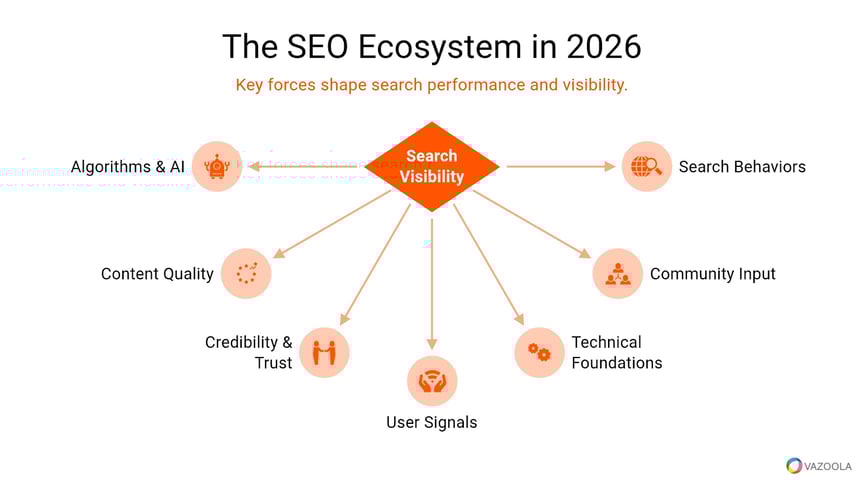
These include: Base ranking from the core algorithm Subject clearness from semantic understanding Old-school keyword matching Engagement signals Freshness Trust and authority Service guidelines and security bypasses As you can see, LLMs (large language designs) use a of and to rank material. Next, let's look at how AI search is impacting traditional SEO projects.
Improving Search Visibility Using Modern AEO Tactics
If your material isn't structured to accommodate AI search tools, you might end up getting ignored, even if you typically rank well and have an exceptional backlink profile. Here are the most crucial takeaways. Remember, AI systems ingest your content in little chunks, not all at as soon as. For that reason, you require to break your short articles up into hyper-focused subheadings that do not venture off each subtopic.
If you don't follow a sensible page hierarchy, an AI system might falsely determine that your post has to do with something else completely. Here are some tips: Use H2s and H3s to divide the post up into plainly specified subtopics Once the subtopic is set, DO NOT raise unassociated topics.

Due to the fact that of this, AI search has a really real recency bias. Occasionally updating old posts was constantly an SEO finest practice, however it's even more crucial in AI search.
While meaning-based search (vector search) is very sophisticated,. Browse keywords assist AI systems make sure the outcomes they recover directly relate to the user's timely. Keywords are just one 'vote' in a stack of seven equally essential trust signals.
As we said, the AI search pipeline is a hybrid mix of timeless SEO and AI-powered trust signals. Appropriately, there are numerous traditional SEO strategies that not just still work, however are important for success.

Latest Posts
Building Effective AI Content Frameworks for Growth
Why Advanced Optimization Software Boost Growth
Preparing for Next-Gen Discovery Signals Shifts